Compositions

The Barriers Between Us

When I offered housecleaning, I grew close with many clients. However, I could never fully join in as a playful participant in our interactions because I had to maintain the marketable veneer of professionalism.

When I offered massage therapy, I could not even greet clients I worked with openly in public, for need to adhere to strict client confidentiality. No matter depths of communication and natural bonding through enacted healing, I was forced to pretend we had no association and to shut off my own needs.

Now, as a creative writer, I must choose carefully which concepts I will present to you – not for fear you will run away or that I will be targeted, but because humans can only handle so much truth.

Alex (An Ideal), Poetic Musings

Dear Alex,

A young boy – once wishing for friendship,
Now as a man, gains focus of many views.

It must be satisfying, yet oddly frustrating:
You can have it all, while denied one’s due.

When nearly anyone can approach, then return to shadows,
You must remain in light, but for moments of private respite.

What think you now of received attentions –
Are heart and mind satisfied and content?

Are you addicted to seek stimulation,
Anxiously fearing the tasp will relent?

For such a one in your position, even the simple becomes complex;
And I imagine in times of trial, life still offers you much to vex, for

As always, your handlers coddled; when fly, the world still keeps
Influence on your destiny – though lighter tug, remains a leash.

Poetic Musings

“Pushing Steam”

When you try to leave a system,
The membrane resists releasing:

Something about homeostasis, and
Mechanism working to preserve this.

You will be seen as a threat for leaving;
Other factors will behave as leucocytes –

Such as extra full hotel fees against funds
Scraped aside for bills being paid, securely.

This will cause a panic response inside you –
As if incapable of properly managing money,

Which pounds all messaging against favor
That you’re capable of exiting successfully.

Compositions

“Dapper Dan” (Goodwill Parking Lot)

When the dreadlocked, hippied-out adult vagrant began hyper-intelligently ranting about the injustices of society’s turning a blind eye to humanity’s connective bonds after I “rejected” his demandingly-proferred, partially eaten Hershey’s (TM) chocolate bar (after he’d so “generously” made efforts to reassure he hadn’t touched the rest of it – but failed to also include whether or not he was carrying COVID), and professed concern that the chocolate was melting in the day’s heat – that “it would be wasted!” – I countered his logic by carrying his philosophy to next higher levels, adding to it my own insightful vexations, as I was ready and willing to engage with him further on the subject.

But, he turned quickly away – as if running. He did not want to hear anyone agreeing or disagreeing with him, and parted with an over-the-shoulder warning: “be careful about that!” implying I was ignoring connective potential, when in fact, he was the one refusing to Receive.

I guess the chocolate melting was more important.

Compositions

Prior Conditioning

I used to think that it made sense that, at least occasionally, a child would require a minimal “smack-to-the-bootie” for insolence or major indiscretion. 

However, having experienced within myself how past trauma now sometimes affects synaptic firing – and noting how said occasional and rare “spank” never built safety nor rapport between a child and me in that moment – I wonder if the act of having been spanked horrendously (and often, without due cause) in my own childhood somehow imbedded at least a smidgeon of false reasoning – and that perhaps, we ought to never “spank” developing human beings, at all. 

Granted (as still occasionally experienced in my youngest’s growth process), an unruly youth-unit can seem “over the top,” with there being (at least in my mind) a need to immediately STOP, if not “correct,” poor behaviors when they are happening and being projected “vociferously” onto me.

But again, maybe this idea (and “need”) is just the bad past programming influencing…

Is it true that without corporal punishment we’d be an out-of-control or extremely passive society? Or is this a place worthy of “applying logic” over heatedly debated emotion?

Certainly, this “militaristic method” can be outed as a need for asserting dominance and/or control over a situation that – quite frankly – can get anybody flustered.

Articles, Compositions

Social Accountability

Cyberbullying affected both of my children when they were in grades elementary to high school.

The ability for students to post videos and make public comments “outing” other children and defaming their reputation (with or without real data) spreads rapidly through the internet like wildfire, and there is no immediate check system put in place to stop this, nor any real consequences.

By the time parents and any authorities were contacted, damage to my children’s social status was already done, and there were no reparations required to be made publicly. This caused embarrassment and humiliation that could not be overcome within the educational system.

I chose to transfer my children to independent studies and charter schools, then supported both of their testing out of high school to give them a chance to start over again by entering city college early, where they could hope to engage in a more mature environment where cyberbullying was cause for expulsion.

This, however, did rob my children of connecting with peers their age and finishing with their high school diplomas. They also struggled with social anxiety for many years because their having to leave public school made them feel like societal outcasts.

The rush of damaging other people’s reputations can make youth feel powerful, and the behavior becomes addictive. It isn’t just about being popular, but that other people’s lives can be destroyed by callous internet photos, videos, innuendos, and statements.

When I was a child, bullying was terrible – true. But, we had the advantage of it taking time for rumor and innuendo to circulate; we had a chance to counteract it, personally, more effectively because hearsay was based upon word-of-mouth and personally-direct interactions.

These days, you can blink – and your reputation is suddenly ruined: once someone soils it, there is almost no way to regain your good name and status as people’s interest in sensationalism propagates misinformation.

How do we stop cyberbullying? Certainly, it is necessary to create a culture that speaks out against it, no longer allows such behavior to have weight in argument, and has instant consequences against those people who thrive on and support it.

But, more importantly, we need to again cultivate good social values of inclusivity, teaching that nurturing and supporting one another is the best way to have a safe and positively-productive society. If a mistake is made, equal (if not more so) efforts must be made to personally and publicly apologize.

After all, cyberbullying is more of a symptom, than a cause: we’ve just been distracted by its actions and results into labeling it as the culprit. When we again value personal accountability and treating one another with respect and honor, cyberbullying will be an experience of the past – because it’s no longer an option.

Spoken Word

The Holistic Human (Spoken Word)

Due to the ever changing versatile flow of emotions –
And due to sense it may seem they’re uncontrollable,

Many people advocate and insist upon cutting off
Receptivity to these integral, hormonal directives.

But, I believe they are an essential part of humanity:
We must learn how to direct their flow, appropriately.

https://soundcloud.com/asbcst227/the-holistic-human-spoken-word-2021

Spoken Word

A Case For Humanity (Spoken Word)

Human life is fragile.

We like to take the human life for granted because we think of all of the opportunities we now have as a human race. We look at the mistakes we make, the atrocities we commit, the choices mis-made.

You know, I like to think that someday I could be immortal so that I could keep living, and keep learning in gathering wisdom. Hopefully, to apply it to our people: to help the young ones grow better and stronger than they’ve ever been able to before; to give solace to the ones who are older who have been hurt and damaged by pain, by war.

I’d love to be one of the Elders that cares for our race and helps bring us to better understanding of our true humility and grace, our power, our strength – to reach and access our true capabilities.

I worry that if I were granted immortality that I would see other immortals become jaded, and it would just be the human struggle for power and resources and control at others’ expense – just on the larger scale. Now we’ve got humans that can live forever vying to always stay in control: how is that different than now?

But it seems to be a good dream to have: to want to be there on the side of Nourishment.

We have such great potential as creatures that contain both animal instinct, and something other: Human Thought. Human capacity to analyze and reason. We are unique. I don’t think that anywhere there’s a species like us.

There may be other advanced civilizations out there in the universe – and maybe we actually come from one of them. But, what we have evolved from and into now is something rather unique, meant to be cherished, meant to be cultivated to have our best attributes drawn forward to stand shining in the sun.

To have the cloud of oppression and waste, and malice, and greed – all the negative things that ego brings to us, lifted off of us – just that burden, lifted…what great things could we achieve?

Ego itself is not bad, but, it’s bad how ego can become abusive.

And I believe that if we nourish what imbalanced ego from the beginning – brought it back into its center – that it could be one of our greatest assets, giving us the will, the knowledge, the determination to manifest our own destiny beyond anything we’ve ever dreamed.

Spoken Word: https://soundcloud.com/user-213139500/a-case-for-humanity-42121

Articles, Compositions

In An Age Of Regret, There Is Healing: Correcting The Marriage Dilemma

There are misconceptions we all travel through life under, one of them being our concept about partnership and marriage.

Without going into the details of all those beliefs and fantasies – ideals we’ve been fed through Ken and Barbie, TV, and generations of observing some marriages work, but many don’t – I want to talk about a phenomena I’ve noticed. There is something that occurs when we go from dating to partnership, from being unmarried and courting to married.

People talk about “the honeymoon period” that happens when we first get together with a partner, and a brief period of time right after being married, where things seem to go very well between the couple – and then the relationship enters a downward slide that over the years never seems to recover as pressures such as children, work, finances, division of tasks, challenges to values, influences from extended family and friends, and societal trends bombard our senses.

Critics who stay single and “available” judge, laugh, and put pressure on struggling couples, encouraging their friends-in-distress to return to “playing the field,” maybe have an affair (a very few mention counseling) – and there’s always the option of divorce, which is now the most popular rip-off-the-scab-and-apply-bandaid, “rinse-and-repeat” approach to dreams of a life fulfilled gone awry.

But, let’s back it up here a minute: let’s go all the way back to the beginning, before everything became a mess and entangled.

I’d like to talk about a phenomenon I’ve noticed: one so subtly stealthy that we all fall into its trap without knowing it. There is a kind of psychological shift that happens when we go from being single to partnered – but especially from unmarried to married.

How do I explain this? Let’s see…it’s like leaving a phase from where we are blissfully unaware and in denial to suddenly entering a preset construct: a forum, like in virtual reality, where pressures we’ve held in check our entire lives suddenly release and must be accounted for. Only this isn’t VR – this is real life – and “Hell” must be addressed and paid if we wish to get to Heaven.

Think about about all of the messaging you’ve heard about marriage, what it means and “should and shouldn’t do’s” you’ve ingested. Think about what you’ve been taught marriage means “In the Eyes of God;” think about what the priests of the church expect from you. Think about all of the arguments your parents had with each other, where they were able to function together – and where they couldn’t.

Think about relationships you saw all around you, what you fantasized about, the ideals you held – and if you saw any examples of these actually functioning and flourishing in your reality. Remember if you ever experienced bullying or abuse, unfairness, criticism, injustice – remember how small you felt then. Think about how you wished you could get even, or were or were not protected. Think about times you felt safe – and when you wanted to run away.

How did you address or cope with any of these experiences and messaging while you grew up? My guess is that you “did the best you could under the circumstances” while being a child and developing adult, most likely without proper support and direction. So here you are now, partially finished and cobbled together at best, locked and loaded with tension waiting to explode, needing to deal with all of these issues as you enter and gain new maturity.

Now that you’ve found someone you would like to partner with and are committed to walking through the door into matrimony, as you open that door, all that past life experience saunters right into the relationship with you. It’s like an ignored child that needs attention and is starving because it hasn’t been fed any food. It’s like a roommate you did not invite – in fact, one ready and willing to trash your home or apartment just because he/she’s an adult now and “has the right to.”

But do you know why all this past internally-suppressed behavior suddenly comes forward? It’s because you now have another person there, every day, to reflect upon and interact with – who by default of close proximity and our need for connection and bonding with another person becomes your mirror. And hey, they promised to “love and cherish you, forever,” right? So they’ve got buy-in. They’re supposed to “be here for you, no matter what.” Now, “the real fun begins.”

The way we look at marriage is terribly skewed. We come into it with all of these external and internally superimposed expectations that marriage will fix everything that’s been wrong in our lives and elevate us to a higher status and better quality of living.

We don’t enter into marriage looking for a partner willing to collaborate with us to overcome our deepest fears, to help create trust where little exists, to consciously bear witness to our internal demons and help support us as we do the work needed to overcome them. We don’t go into marriage for the real opportunity that marriage represents: healing and deep bonding. Yet, we get slammed by the force of all these past issues emerging into the relationship, once we’ve found someone we want to commit to.

We can run from these truths, but we cannot hide: they will creep through the seams into our daily lives, no matter how many layers of sugar coating we try to cover them with.

That past unease, unrest, and dissatisfaction will – eventually – permeate everything we want to protect from it simply because it is there as a continuously held negative charge and puts pressure on us subconsciously while we deal with accumulating daily challenges, consciously. To prevent damaging our partnership, we must address these preexisting issues from the very beginning as a part of the blueprint-to-success for our marriages.

This brings to mind how flawed our partner-seeking qualifications are. We are taught to go for attraction, money, and external opportunities. While these are important, they can each be achieved over time to some degree – even if they are not initially present. The key ingredient we are never taught to look for – but that is the crux upon which many successful marriages depend – is compatibility in communication, and whether or not our partner truly likes us, has a compatible belief system to ours, and wants bonding connection with us. This is where we find the real “buy-in.”

If we have these core ingredients of communication and regard’s affection, then the matrix of our marital relationship becomes ours to design to our mutual, collaborative satisfaction.

Most everyone has something attractive about their body and personality: these aspects can be focused upon and enhanced by paying attention to them and building upon them. If we invest in education, strategy, and responding to good timing, we can gain financial success. As we focus on making real progress by putting in real work and applying conscious awareness, we place ourselves in better circumstances. Over time, our productive efforts yield results we learn from, improve upon, and that bring us more opportunities.

So again, let’s take it back to the basics.

Know that marriage is not what we’ve come to believe it to be, but that many of the things we’ve heard it ought to be can be prospectively achieved if we recognize its true opportunity: it is the chance to enter into a forum with an equally invested partner and do “the dirty work” it takes for us to become better humans.

Articles, Compositions

Honeypotting Degrades Society

As part of my writing and love of working with words, I will often look up concepts and phrases that come to me from past memory, or that I’ve heard recently, in order to assess relative accuracy of traditional vs currently applied meaning.

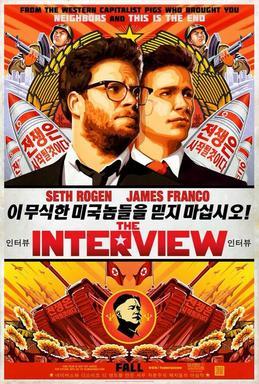
Today, one of those terms was “honeypotting” because I remembered how it was mirthfully used in the movie, The Interview, featuring actors James Franco, Seth Rogen, and Randall Park, where two journalists are hired by the CIA to assassinate the Korean dictator, Kim John-un, while giving him an interview.

Watching this comedy first introduced me to the concept of honeypotting. (Spoiler Alert) Dave Skylark, the main journalist, gets lured into helping the CIA by Lacey, a female agent who dresses, behaves in ways, and wears glasses to match his type of attraction in order to gain his desire to help the agency. Later in the film, Skylark is lured into feeling he is best buddies with the North Korean dictator who shares with him the fun of firing a tank, singing to Katy Perry’s music together, and even gifts him with a puppy.

The term honeypotting is used to describe these key moments of comedic impact that were fun and witty, so I wanted to be sure I would be using the term properly before I shared a joke using the word with a dear friend.

As I began my normally blissfully-curious internet search for engaging life’s meaning, I found this article, Honeypotting is the new technique to catch a cheater | Daily Mail – and felt an immediate sense of outrage.

The term honeypotting in the article noted above currently defines the word as when “clients” now hire “detectives” whose job it is to attempt to lure the client’s significant other into having an affair. It is a deviously methodical attempt to test a supposed loved one by temptation’s persuasion to see if they are “strong enough” or “true enough” to resist having the affair – thus proving or disproving fealty to the couple’s relationship.

I feel that there’s a natural order and flow to a human life’s energy, right timing, etc., that may affect who we meet in our lives, when, and where – including circumstances we somehow find ourselves in – for worse or for better. Human instincts have been evolving over millennia, honed to observe and track social cues and trends to ensure our survival as a species.

Our brain and body receptors are highly tuned into picking up vast streams of perceptual data that we are not always aware of: our instincts sense the ebb and flow of this data which results in the ability to recognize patterns – much like how we perceive the weather getting warmer when spring is coming – except on more subtle levels. Our subconscious perception of this data will, at times, trigger us to consciously notice environmental factors as they shift, or when opportunities for self advancement appear suddenly out of the blue. Our systems are designed to hit us with a jolt of “pay attention” to ensure maximum success in survival strategies.

Add to this the hypothesis posed by such New Age concepts as The Law of Attraction promoting the idea that as we change our attention and focus, different sets of opportunities and circumstances then seem to be drawn toward us because we shift the conscious paths we are taking into a state where we are receptive for alternative beneficience that we’d like to achieve. Whether or not humans have an energetic connection to “cosmic energy” and that we can “tap into unlimited abundance” is something that remains to be seen by intensive, over time proven trial and error results. The relevant component is that as humans shift what we focus on in our lives, our subconscious shifts what it pays attention to and brings to our awareness.

The point I am trying to make here is that human consciousness has a sense on some level at all times of where we are in our lives relative to the lives of others around us, and it knows if something rare or unusual comes into the scene. We are wired to pick up and interpret this information as “danger” or “opportunity.” The more intense either messaging, the more extreme we are prompted by brain and body processes to react. Corporations and social media have designed their target marketing to access and manipulate subconscious responses. By using data gathered about us over time, they’ve developed ways to attract our interests to gain ratings and buy products.

I believe that when you artificially insert a honeypotter – a person of magnetic attraction designed by clothing, looks, and behavior to grab the attention of our subconscious data receptors – outside the normal sequencing flow of a person’s life patterning, the “target” is triggered more powerfully than they would normally be to “pay attention and react” than had they met such a person through natural life circumstances.

When something is “out of the norm,” the signal we receive to pay attention can be triggered to blare even louder to cause us to have an incredibly powerful reaction – which is actually our system trying to warn us of a type of “danger” – but because honeypotters are guised to overly appeal to our senses, the “danger” they pose is hidden by “attractiveness.” This is called misattribution of arrousal, where the physical response to danger is misperceived as a “thrill of excitement” in response to the honeypotter.

The honeypotter’s highly calculated sensual overstimulation presentation causes the “danger” signal to become confused and misdirected while manipulated inhibitions fall prey to suddenly making us feel out of control of our emotions as hormones ramp into now exacerbated responses. This effect can hijack a person’s normal internal stability, causing inability to respond with control and/or to experience a lapse in judgement.

Honeypotters, like corporations and social media, know exactly what they’re doing when they use strategies to tap into our hindbrain reactions and hormonal responses to manipulate us into irregular behavior: It’s their job.

The type of responses they initiate in us are what we’d feel naturally when we come across someone that we are prospectively “designed” to recognize as a possible mate to bond with. The human body realizes the honeypotter’s placement in our life’s time continuum is out of the norm – but because of the intensity of reactions through the art of crafted seduction, our systems respond poorly to increased pressure.

It could also be argued that if a client hires a honeypotter, their relationship with their significant other has been having issues to begin with. This sense of mistrust and needing to find out if their partner can be basically entrapped into adultery may be based upon imbalance in the relationship, and placing such pressure on their partner may push the “victim” into thinking and feeling, “You know what? Maybe I do need an escape!”

Furthermore, do we really think that if a honeypotter were able to get our partner to commit “untoward acts” that once our partner realizes they’ve been deceived, they’ll come crawling to the negotiating table with their arms open wide and beg for forgiveness? Why would any self-respecting person wish to reconcile after such actions from someone they’re supposed to be able to trust – but who, instead, set them up and did not initiate open, honest, and direct communication?

Who, at this point, is really to blame for the victim’s indiscretions? Methinks that it’s the untrusting partner – and the honeypotter, who carries no blame for their own actions under the guise of following their “job description.”

Poetic Musings

Life’s Highway

Two struggling desperately
Plump fluffs of yellow joyousness,
Pummeled by forces’ velocities:

Reclaiming one upon hearing
Terrified cries for help sighting –
Black jacket waiving off
Cars’ bullfighting.

Wiggling, calling – bravely trying
Assertion of days’-old independence;

Hidden drainage providing
Forest glade pool’s cool relief:
Bundled safe –
Prevented from dying.

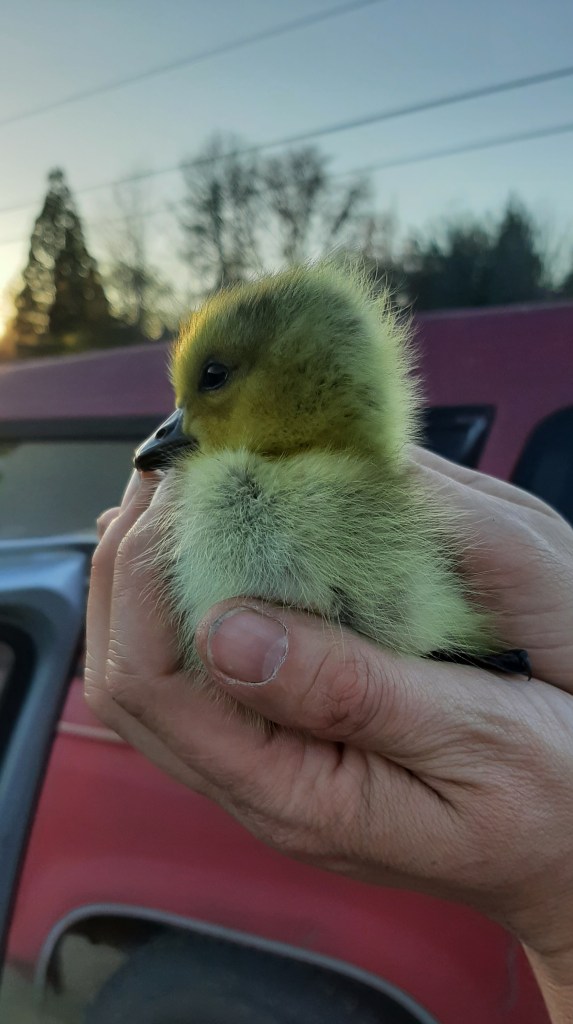
(Rescued Canadian Goose Gosling)